
This page explains how I would approach a PlayOJO right to information request if I wanted to know what personal data is held about my account. It is designed for players in Canada, while using GDPR-style terminology because that language is widely recognised as a practical privacy standard. Rather than repeating the full privacy policy, this guide simplifies the process: what the GDPR right to access means, what data you can ask for, how to send a PlayOJO GDPR request, how long a reply may take, and what to do if the response feels incomplete. I take privacy seriously, and my goal here is to make the process clear, transparent, and easier to follow.
Top PlayOJO App offers for UK players
Pick the offer that suits how you play — slots, app cashier or high-stakes live.
- 1,000+ slots on iOS and Android with Face ID login
- No wagering on bonus winnings — cash out instantly
- Push notifications for Kicker promo codes
- PayPal cashier built into the app
- Native iOS and Android apps with biometric login
- Fast PayPal withdrawals from the app cashier
- Kicker promo codes delivered via push
- Real-time live casino tables in the app
- Real-time live roulette, blackjack and baccarat
- Daily withdrawal limit up to £50,000 for verified VIPs
- Priority cashout queue — under 12 hours via PayPal
- Dedicated account manager via in-app chat
★ 4.7 / 5 — based on 1,247 UK app store reviews
Understanding your right to information under GDPR
Under the GDPR right to access, you can ask whether PlayOJO processes your personal information and, if it does, what data is involved and why it is used. In plain language, this is your right to get visibility into the data attached to your profile.
For Canadian players, GDPR wording is still useful because many operators structure privacy processes around similar international standards. That does not mean every legal detail is identical in every province or country, but it gives a familiar framework for a data subject request PlayOJO users can understand.
You can generally expect answers about:
- whether your personal information is being processed
- the main categories of data linked to your account
- the purposes for using that data, such as service delivery, security, and legal compliance
- broad retention and sharing details, where applicable
You have the right to:
- ask for confirmation that your data is being processed
- request access to the personal data connected to your account
- receive a summary of why that information is kept
- understand, at a general level, who may receive or review the data
- ask follow-up questions if part of the response is unclear
This guide focuses on access and information rights. Other rights, such as correction, deletion, or restriction, are usually covered in the wider policy framework.
What information you can request from PlayOJO
The exact scope of a PlayOJO GDPR request depends on how you used your account. A newer account may only have registration and login records, while a long-standing account may include transaction history, customer support messages, verification notes, and session activity.
In most cases, players ask for these data groups:
- Account and identity details: name, contact details, account ID, registration date, and account profile information.
- Gameplay and session data: session dates and times, game types used, and general activity history, including wins and losses in broad account reporting.
- Payment and transaction records: deposits, withdrawals, payment methods used, and transaction timestamps, without exposing sensitive full payment credentials.
- Technical and device information: IP logs, device or browser type, security alerts, and login activity.
- Responsible gaming and compliance records: limits, self-exclusion status, verification markers, and KYC/AML-related notes, without disclosing internal detection methods.
Some information may appear in aggregated or anonymised form, and some records may not be part of an individual export if they are no longer linked directly to an identifiable account. Below, I’ve set out a simple snapshot table to show the categories players most often expect to see.
At-a-glance: Typical data categories in a PlayOJO GDPR response
This table gives an illustrative map of the main personal data categories commonly requested under the GDPR right to access. The final data package can differ based on account history, support interactions, and legal obligations.
| Data category | Examples in PlayOJO context | Why we keep it | Typical sources |
|---|---|---|---|
| Account details | Name, username, email, registration date | Account management and service access | Registration forms, profile updates |
| Gameplay history | Session history, game types, activity records | Service delivery, reporting, fairness controls | Platform activity logs |
| Payment records | Deposits, withdrawals, transaction dates, method type | Payment processing, fraud checks, compliance | Payment systems, account ledger |
| Technical logs | IP address, browser type, login timestamps | Security, troubleshooting, platform integrity | Device and server logs |
| Responsible play data | Limits, exclusion status, safer play markers | Player protection and compliance duties | Account settings, compliance systems |
| Customer support interactions | Chat transcripts, email support records, complaint notes | Case handling and quality review | Help desk and support tools |
This is only a guide. The actual field set depends on your account history and applicable legal retention rules.

Most played slots in the PlayOJO app
All slots →







How to submit a GDPR right to information request to PlayOJO
If I were submitting a playojo right to information request, I would start with the official contact paths listed in the privacy policy or support area. There is no need to guess a contact address. If you are unsure which contact option to use, you can start via the support centre here: contact PlayOJO support.
Your request should clearly identify you as the account holder and clearly state that you want access to, or a copy of, your personal information. It also helps to include practical identifiers such as your username, registered email, or other account details that allow support staff to locate the right profile quickly.
A simple process usually looks like this:
- Sign in to your account, if access is still available.
- Open the help, contact, or privacy-related section.
- Choose the topic closest to privacy, data request, or personal information.
- State that you are making a data access request for your personal information.
- Include enough account-identifying information to support verification.
- Send the request through the official channel.
- Save the confirmation email, case number, or screenshot for your records.
If you want more context before sending anything, review the policy pages first so your wording is more precise and easier to process.
What to include in your request (and what not to share)
A good request is specific enough to identify your account, but not overloaded with sensitive details that are unnecessary at the first contact stage. In my view, the safest approach is to provide core account information and wait to see whether extra verification is requested through official channels.
Details that often help include your username, registration email, country of registration, and a short note that you are requesting access to personal data connected to your PlayOJO account. If your account is closed, mention that as well and include the details you used when the account was active.
Do not send passwords, full card numbers, or unrelated identity documents unless support specifically requests them through a secure process.
| Type of detail | Helpful for your request? | Notes |
|---|---|---|
| Username | Yes | Helps locate the account quickly |
| Registration email | Yes | One of the most useful identifiers |
| Country of registration | Yes | Can help match account records |
| Account ID reference | Yes | Useful if you already have it |
| Screenshot of account area | Only if asked | Can help clarify an issue, but not always needed |
| Government ID reference | Only if asked | Share only through official secure verification steps |
| Full card number | No | Unnecessary and too sensitive |
| Passwords | No | Never share passwords in a request |
Timelines, verification and possible limitations
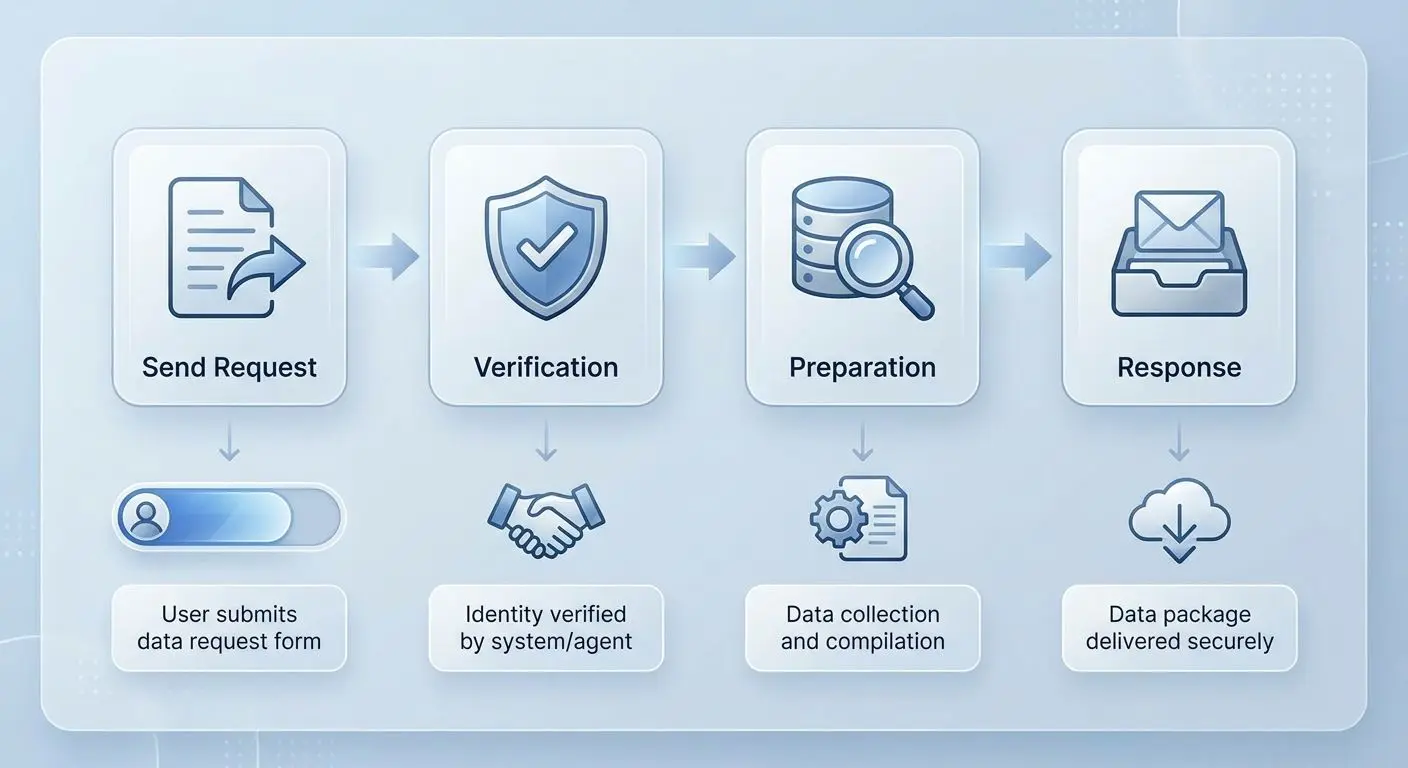
A PlayOJO privacy request process is not always instant. The operator usually needs time to log the request, confirm identity, gather records from different systems, and prepare a response that meets legal and internal security requirements. I would generally expect a reply within a reasonable timeframe aligned with international privacy standards, but the exact timing depends on account complexity.
Identity verification is a normal part of the process. Before personal data is disclosed, PlayOJO may need to confirm that the person making the request is really the account holder. That protects against unauthorised access and supports regulatory duties. Verification may happen through your account, by matching account details, or by asking for additional supporting information.
There can also be limitations. Some records may be partially redacted if they involve anti-fraud controls, AML review logic, or third-party privacy rights. In other cases, older records may have been anonymised or removed under retention rules.
| Stage | What usually happens | What you should do |
|---|---|---|
| Request received | Your message is logged and routed | Keep the confirmation or case ID |
| Identity verification | Support checks that you are the account holder | Respond only through official channels |
| Data gathering | Relevant records are collected from internal systems | Wait for updates and answer follow-up questions |
| Response sent | You receive the data or a summary response | Review it carefully and save a copy |
| Follow-up questions | Clarifications or narrower requests may be discussed | Reply clearly and refer to your original request |
For broader information on retention and data protection practices, I recommend reviewing PlayOJO privacy and cookie details.
Learn more in our full Privacy Policy
If you are not happy with the response
Sometimes a user receives a reply and feels that part of the information is missing, too broad, or not specific enough. If that happens, I would first compare the response with the wording of the original request. A vague request often leads to a broad summary rather than a more detailed account-level disclosure.
You can then send follow-up questions through the same contact route and ask for clarification on the exact categories you expected to receive. In some cases, a narrower and more precise request works better than a very wide one. You can also review PlayOJO terms and conditions alongside the privacy documents if your concern overlaps with account use, verification, or account restrictions.
PlayOJO is expected to aim for a transparent response within legal and regulatory limits, so a calm and specific follow-up is usually the best next step.
Staying safe and protecting your privacy
When sending a how to get my data from PlayOJO request, security matters on both sides. Use official site channels, double-check the URL, and avoid sharing sensitive account details over open or unverified methods. I also recommend using a private device and a secure internet connection when discussing personal data.
PlayOJO uses technical and organisational safeguards, but users still have a role in protecting their own information. Small steps reduce the risk of account exposure or phishing during a privacy request process.
| Tip | Why it matters | How to do it in practice |
|---|---|---|
| Check the website URL | Reduces phishing risk | Open support pages from the official site only |
| Avoid public Wi‑Fi | Lowers interception risk | Use home internet or mobile data |
| Never share your password | Prevents account takeover | No legitimate data request should need your password |
| Keep copies of replies | Helps with follow-up and record keeping | Save emails, PDFs, and case numbers |
| Use a secure device | Protects sensitive files | Avoid shared computers for privacy requests |


Frequently Asked Questions (FAQ)
Do I need a PlayOJO account to submit a GDPR right to information request?
In most cases, the request relates to personal information linked to a current or past PlayOJO account, so an existing or previously used account is usually part of the process. If your account has been closed, you can still explain that in your message and provide the identifying details you used when the account was active.
How long does it usually take to receive my data from PlayOJO?
A response usually takes a reasonable amount of time and depends on the amount of data involved, the age of the account, and whether extra identity checks are needed. PlayOJO should aim to respond as quickly as possible within the legal framework that applies to the request.
Will my request affect my ability to play or withdraw at PlayOJO?
A playojo gdpr request on its own should not negatively affect normal account access or withdrawal activity. At the same time, separate security, verification, or responsible play checks may still run if they are required under standard account controls.
Can I ask PlayOJO to correct or delete my data instead of just accessing it?
Yes, but those are separate privacy rights, such as rectification or erasure, rather than the right to access. For the broader framework, review PlayOJO privacy and cookie details, where those rights are usually explained in more depth.
Where can I follow PlayOJO updates about privacy and responsible gaming?
Beyond the legal pages on the site, PlayOJO may share updates through its public channels. You can check Facebook, Instagram, X (Twitter), and YouTube for official news and updates.